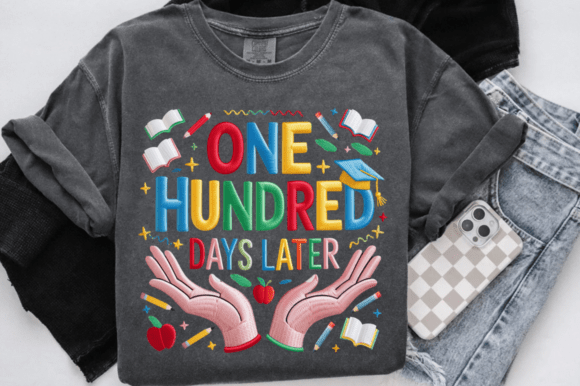
One Hundred Days Later Faux Embroidery Review
As a designer who has spent years navigating the intersection of digital graphics and physical stitching, I approach every new asset with a critical eye. The market is flooded with generic machine embroidery design files, but finding one that translates well from screen to fabric requires careful evaluation. Today, I am putting One Hundred Days Later Faux Embroidery under the microscope. This isn't just another graphic file; it is a potential centerpiece for your next collection of custom apparel or handmade goods. Let's dig into how this specific design performs in real-world scenarios.
First Impressions: Visual Weight and Mood
When I first opened the preview for One Hundred Days Later Faux Embroidery, the immediate impression was one of nostalgic warmth. The aesthetic leans heavily into the "faux" style, mimicking the look of thick, textured stitching without necessarily requiring complex digitization if used as a print-on-demand graphic. However, for those of us who stitch by hand or machine, the visual weight is substantial. The layout suggests a bold statement piece rather than a subtle accent.
The design feels perfectly suited for the T-Shirt Designs category, particularly for oversized sweatshirts or heavy-weight tees where a large chest graphic can breathe. The lines appear crisp, which is promising for maintaining clarity during the conversion process from a PNG to an actual embroidery file. If you are planning to use this as a digital product seller offering printable mockups, the high resolution ensures your previews will look professional. But does it hold up when we talk about actual thread?
Testing the Waters: A Real-World Scenario
To truly understand the utility of One Hundred Days Later Faux Embroidery, I imagined a specific project: creating a limited run of commemorative tote bags for a local boutique celebrating their anniversary. The goal was to create a handmade product that felt premium yet accessible. In this scenario, the design serves as the primary focal point on a natural canvas tote.
Here is where the practical judgment comes in. If I were to digitize this for a tote bag design, I would need to consider the stitch density. The faux embroidery style often relies on the illusion of depth created by shadow lines and varying stroke widths. On a coarse canvas, a dense fill stitch might pucker the fabric if not stabilized correctly. Conversely, using a running stitch or a lighter satin border could capture the spirit of the original graphic while preserving the drape of the bag. For a small shop product like this, the ability to adapt the design to the material is crucial for customer satisfaction.
I also considered how this would work on a sweatshirt embroidery project. The soft fleece of a hoodie interacts differently with thread than cotton. The "faux" look actually works in our favor here because it allows for a slightly more relaxed stitching pattern. Customers buying these items often look for that "vintage worn-in" feel, and One Hundred Days Later Faux Embroidery delivers exactly that vibe without needing perfect, rigid precision.
Navigating Fabric Challenges and Technical Constraints
While the design is versatile, there are specific situations where caution is required. As an experienced decorator, I know that not all fabrics play nice with bold graphics. If you attempt to apply this design to thin fabric or highly stretchy materials like jersey knit, the structural integrity of the garment could be compromised. The visual weight of the design demands a stable base.
Furthermore, consider the hoop size. While the source file boasts a resolution of 4500 x 4500 PX, which is excellent for scaling, translating that into a physical hoop requires math. If you are working with a standard 4x4 inch hoop, you may need to simplify certain elements of the embroidery project to prevent thread breaks or missed stitches. Detailed corners and tiny lettering within the "faux" texture can get lost if scaled down too aggressively.
For dark fabric applications, such as black denim jackets or navy caps, you must account for the backing. A design that looks vibrant on white might disappear on black unless you utilize a stabilizer with a contrasting underlay or add a layer of tonal thread. Always test the design on scrap fabric first. Check the thread colors against your intended background to ensure the contrast remains sharp after washing.
Commercial Viability and Brand Consistency
For the Etsy seller or creative entrepreneur looking to expand their catalog, One Hundred Days Later Faux Embroidery offers significant value. It taps into a trend of sentimental milestones, making it an ideal candidate for personalized gift markets. Think baby showers, anniversaries, or friendship bracelets. The emotional connection buyers feel toward "milestone" designs often leads to higher engagement and better reviews.
However, before listing this as a commercial embroidery asset, you must verify the licensing terms. The description mentions it is a PNG file for cutting, but if you intend to sell finished embroidered items, you need explicit permission. Using a design for personal projects is one thing; selling it as part of a craft business is another. Ensure your license covers finished product sales to avoid legal headaches down the line.
From a branding perspective, this design helps establish a cohesive look for a boutique branding strategy. If your shop specializes in nostalgic or milestone-themed decor, incorporating this into your design assets creates a recognizable visual language. Whether it appears on a kitchen towel, a pillow cover, or a custom apparel line, consistency builds trust with your customers.
Practical Designer Notes for Success
If you decide to move forward with One Hundred Days Later Faux Embroidery, here are my top recommendations for ensuring a successful outcome:
- Test on Scrap Fabric: Never skip the test run. Stitch out a small version to check tension and density before committing to expensive materials.
- Review Stitch Density: If digitizing yourself, watch out for overly dense areas that could cause puckering, especially on textured fabrics.
- Confirm Hoop Size: Measure your design against your machine's capabilities. Don't force a large design into a small hoop.
- Inspect Small Details: Zoom in on the "faux" stitching lines. Ensure they are thick enough to be visible once stitched but thin enough to maintain the artistic style.
- Use Proper Stabilizer: For embroidered patch applications or heavy garments, a cut-away stabilizer will provide the longevity needed for frequent washing.
- Check Licensing: Double-check the usage rights for commercial embroidery versus personal use to protect your business.
In conclusion, One Hundred Days Later Faux Embroidery is a strong contender for designers looking to add character to their portfolio. It bridges the gap between digital art and tactile craft beautifully. By respecting its technical requirements and understanding its best use cases, you can create stunning, high-value products that resonate with customers. Whether you are making a single holiday gift or launching a full small shop product line, this design has the potential to elevate your work.